
What is Predictive Search and Why Is It Crucial in Your SEO Strategy?
Predictive search influences how search engines interpret intent, surface topics, and determine which content gains visibility across traditional and AI-driven results. This guidance is especially relevant for small to mid-sized businesses adapting to changing search behaviour and AI Overviews, helping align content with real user intent.

Written by Carissa Krause
Last updated January 26, 2026 • First published May 31, 2022
TL;DR – Key Takeaways for Predictive Search in SEO
- Predictive search reflects how search engines interpret user intent, not a list of keywords to optimise for.
- It influences which topics and questions gain visibility, especially in AI-driven search results.
- Predictive signals are based on aggregated behaviour patterns, not individual user personalisation.
- The greatest value comes from understanding recurring questions and decision stages, not chasing suggestions.
- Clear, useful content aligned with real user needs is more likely to remain visible as search evolves.
Predictive search has long helped people find information faster, but today its impact goes far beyond speed. As Google has invested more heavily in AI-driven search systems, predictive search now plays a key role in shaping what people see, which questions surface first, and how search engines interpret user intent at scale.
When we originally wrote this article in 2022, predictive search was largely understood as a helpful efficiency feature. It referred mainly to autocomplete and suggested queries that helped users type faster, refine searches, and reach information with fewer keystrokes, and from an SEO perspective, it was often discussed in terms of keyword ideas, engagement signals, and potential downstream effects like retention or bounce rate. Since then, predictive search has evolved significantly.
With the introduction of AI Overviews and more advanced AI-driven search systems, predictive signals are no longer just about speed or suggestions. They now play a deeper role in how search engines interpret intent, surface questions, group topics, and decide what information is shown or summarised in the first place.
As a result, predictive search today is less about optimisation tactics and more about understanding how visibility, discovery, and relevance are shaped in modern search environments.
What Predictive Search Is and How Search Engines Use It
Predictive search refers to the systems search engines use to anticipate and interpret user intent by analysing large-scale patterns in how people search, refine queries, and explore related topics. These systems rely on aggregated behaviour and language trends to surface likely questions, organise topics, and guide discovery across search results, including AI-driven features. Predictive search reflects common intent patterns rather than personalised predictions and does not function as a direct ranking mechanism.
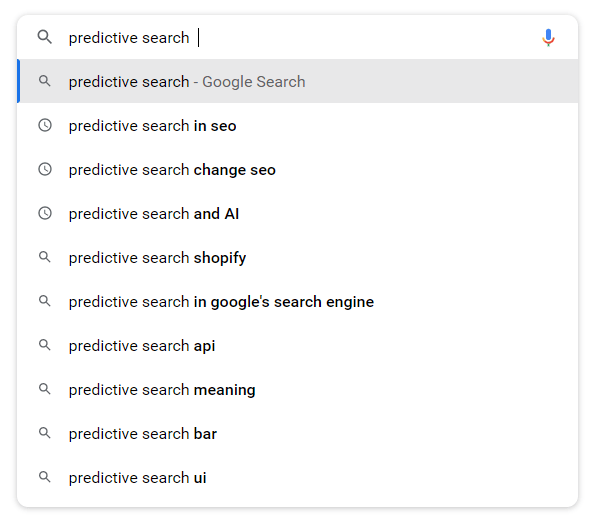
The most familiar examples of predictive search are autocomplete suggestions that appear as a user types, along with related searches shown on search results pages. While these features feel interactive, they are not personalised predictions about individual users. They are aggregated signals derived from millions of searches that reflect common language, intent, and behaviour across a broad audience.
At its core, predictive search helps search engines understand intent earlier and more accurately. By observing how queries tend to unfold, which follow-up questions are common, and how people move between related topics, search engines can guide discovery and interpret what users are actually trying to find, not just what they type.
LIKE WHAT YOU’RE READING?
If these articles are helpful,
imagine what our team
can do for you!
Let’s identify the quick wins you can easily apply to your website.


Not Sure What Your Website Needs Anymore?
Search has changed. AI tools are influencing visibility. Let’s clarify what actually matters for your business now.
Not Sure What Your Website Needs Anymore?
Search has changed. AI tools are influencing visibility. Let’s clarify what actually matters for your business now.
In modern search environments, predictive search is closely tied to AI-driven systems that model intent, relevance, and topical relationships at scale. These systems use predictive signals to inform what questions surface, which topics gain visibility, and how information is organised and presented across search results.
For SEO, predictive search should be understood as a reflection of real-world search behaviour and language patterns, not as a list of keywords to target or optimise for directly. Its value lies in revealing how people think, search, and explore information, rather than offering a shortcut to rankings.
How Predictive Search Has Evolved with AI
Predictive search works by analysing large volumes of historical and real-time search data to identify patterns in how people search, refine queries, and explore related topics. Rather than reacting to individual searches in isolation, search engines evaluate aggregate behaviour across millions of users to understand common language, intent, and decision paths.
These systems observe signals such as how queries are phrased, which searches tend to follow one another, and how users interact with results. Over time, this allows search engines to recognise predictable relationships between topics, questions, and stages of intent, even when exact wording varies.
Machine learning and AI models play a central role in this process. They help search engines generalise from past behaviour to anticipate likely queries, interpret incomplete searches, and surface suggestions that reflect how people typically seek information. This is why predictive search often reveals intent more clearly than isolated keywords alone.
Context also matters. Predictive systems may account for factors such as location, device type, seasonality, and language trends to ensure suggestions remain relevant without relying on personal user data. The goal is not to predict what a specific individual will search next, but to reflect what is most useful and common for a given search context.
In modern search environments, predictive signals extend beyond autocomplete. They influence how topics are grouped, how related questions are surfaced, and how AI-driven features organise and present information. As a result, predictive search plays a behind-the-scenes role in shaping visibility, discovery, and relevance across search results.
For businesses, this means predictive search is less about reacting to suggestions and more about understanding how search engines interpret demand at scale. Clear, consistent content that aligns with real user questions and language is more likely to benefit from these systems than content built solely around isolated keywords.
Why Predictive Search Influences SEO Visibility and Discovery
Predictive search matters for SEO because it reflects how search engines understand what people are actually looking for. It shows the language, questions, and patterns that come up again and again when people search, helping search engines interpret intent, not just match keywords.
- Predictive search reflects real search behaviour
- It helps search engines interpret intent and relevance
- It influences discovery and visibility, not rankings directly
- It provides insight, not optimisation shortcuts
Today, visibility in search is influenced less by exact phrases and more by how well your content strategy aligns with real user needs. Predictive signals help guide which topics surface, which questions are prioritised, and how information is presented, especially in AI-driven search features.
For businesses, this means predictive search is not something to optimise for directly. Its real value is in helping you understand how your customers think, what they care about, and how they explore a topic. Content that clearly answers real questions, uses natural language, and shows genuine understanding is far more likely to stay visible than content built around isolated keywords.
In short, predictive search rewards clarity and relevance over tactics. When your SEO strategy focuses on being genuinely helpful and aligned with real search behaviour, you are far better positioned as search continues to evolve.
What Predictive Search Reveals About User Intent and Decision Stages
Predictive search is useful because it highlights patterns in how people think, not just the words they type. The suggestions that appear in search reflect recurring questions, concerns, and language that show up consistently across many users, giving search engines strong signals about intent.
More importantly, these patterns often reveal where people are in their decision-making process. Some predictive suggestions point to early research and learning, others reflect comparison or evaluation, and some indicate readiness to take action. Seen this way, predictive search helps clarify not just what people are searching for, but why they are searching at that moment.
For businesses, the value is not in collecting or chasing individual suggestions. It is in recognising which themes, questions, and language patterns keep appearing and understanding what they signal about customer needs and expectations. This perspective makes it easier to create content that supports real decision-making, rather than content built around isolated phrases.
When interpreted thoughtfully, predictive search offers a window into real-world intent. It helps businesses focus on the questions that matter most, align messaging with how customers actually think, and make clearer, more relevant content choices as search continues to evolve.
How Businesses Should Use Predictive Search as Strategic Insight
Today, predictive search should be treated as a source of insight, not a checklist to optimise against. Its value lies in helping businesses understand how customers search, what questions come up repeatedly, and how search engines interpret intent, not in providing phrases to copy or target directly.
The most effective way to use predictive search is to look for patterns. When the same questions, themes, or concerns appear consistently, they often point to real information gaps worth addressing. Content that clearly answers these recurring questions is more likely to remain relevant and useful, both to searchers and to AI-driven search systems.
Language matters just as much as topics. Predictive search highlights how people naturally describe their problems and needs. Using that language clearly and accurately helps your content feel familiar and understandable, without forcing exact phrasing or awkward optimisation.
It is also important to think in terms of topics, not individual queries. Rather than chasing every suggested phrase, businesses benefit more from building clear, well-structured content around the subjects they are genuinely qualified to speak about. This kind of topical clarity makes it easier for search engines to understand what your business offers and when your content should surface.
Ultimately, predictive search supports better decisions when it is used with restraint. By focusing on clarity, relevance, and real customer questions, businesses reduce the risk of over-optimisation and position themselves more effectively as search continues to evolve.
Common Misunderstandings About Predictive Search in Modern SEO
Predictive search is often misunderstood, especially when it is discussed in isolation from how modern search actually works. Clearing up a few common assumptions helps avoid wasted effort and unrealistic expectations.
Predictive Search Does Not Guarantee Traffic
Seeing a query appear in predictive suggestions does not mean your content will receive traffic. Predictive search reflects what people commonly search for, not which websites search engines will send traffic to. Visibility still depends on how well your content answers the query and whether it is considered trustworthy and relevant.
Not Every Suggestion Is a Good Business Opportunity
Many predictive suggestions reflect curiosity, early research, or general interest rather than commercial intent. Chasing every suggested phrase can lead to content that attracts attention but does not support your actual business goals. Relevance to your services and audience should always come first.
Matching Phrases Is Not Enough
Predictive search does not reward pages simply for using similar wording. Search engines evaluate the quality, clarity, and usefulness of content, along with signals of experience and authority. Content that genuinely helps users understand a topic is far more likely to remain visible than content created solely to mirror suggested phrases.
Understanding these limitations makes predictive search far more useful. When treated as a source of insight rather than a shortcut, it supports better judgement and more effective SEO decisions.
When Predictive Search Should Influence Your SEO Strategy
Predictive search should not drive every SEO decision, but there are specific situations where it provides meaningful insight. The key is knowing when to pay attention and when to ignore the noise.
When You Are Trying to Understand Real Search Demand
Predictive search is most useful when you want to understand how people naturally phrase questions and what they tend to search for next. Repeated patterns in predictive suggestions can highlight real demand and common concerns that are worth addressing, especially when those patterns align with your services or expertise.
When You Are Planning or Refining Content Topics
If you are deciding what content to create or update, predictive search can help validate whether a topic reflects real interest. It is particularly helpful for identifying supporting questions, clarifying language, and understanding how a topic fits into a broader decision-making journey, from early research to readiness.
When You Are Evaluating Search Intent, Not Keywords
Predictive signals are most valuable when used to interpret intent rather than to collect phrases. They can help you distinguish between informational, comparative, and action-oriented searches, which makes it easier to align content with what searchers are actually trying to accomplish.
When You Are Checking Alignment With How Customers Think
Predictive search can act as a reality check. If the language and questions it surfaces differ from how you describe your services, it may indicate a gap between your messaging and how customers search. Closing that gap often improves clarity and relevance across your site.
When You Should Not Rely on Predictive Search
Predictive search should not be used as a shortcut for rankings, a replacement for strategy, or a reason to chase every suggested query. Not every predictive signal represents a good opportunity, and many reflect curiosity rather than business intent.
Used thoughtfully, predictive search is a supporting signal. It works best alongside clear positioning, strong content, and a solid understanding of your audience, not as a standalone SEO tactic.
How Predictive Search Fits Into the Broader SEO and AI Landscape
A few years ago, we expected predictive search to change SEO mainly by increasing the importance and complexity of keyword research. We anticipated that search engines would adapt more quickly to user behaviour, making rankings harder to control and pushing businesses to rely more heavily on data, tools, and technical SEO expertise.
What we did not fully anticipate was how quickly AI-driven systems, including AI Overviews, would reshape predictive search itself. Rather than simply influencing keywords and rankings, predictive signals now play a much larger role in how intent is interpreted, how topics are surfaced, and how information is summarised and presented, shifting SEO away from optimisation tactics and toward clarity, relevance, and real-world usefulness.
Looking ahead, predictive search is best understood as part of a much larger shift in how search works. Search engines are no longer just matching queries to pages. They are trying to understand intent, anticipate follow-up questions, and decide which information is most useful before a user ever clicks. Predictive signals help power that process.
As AI becomes more integrated into search results through features like AI Overviews, predictive search influences which topics surface, how questions are grouped, and which sources are considered credible enough to be referenced or summarised. This means visibility is increasingly shaped by how clearly and consistently your content aligns with real user needs, not by how precisely it targets individual keywords.
For businesses, the practical takeaway is this: SEO is becoming less about optimisation tricks and more about communication. Content that answers real questions, uses natural language, and reflects genuine experience is easier for both users and AI systems to understand and trust. Predictive search rewards clarity, relevance, and consistency over time.
In this environment, the goal is not to chase every new feature or trend. It is to focus on being genuinely useful to your audience, structuring your content clearly, and staying aligned with how your customers actually search and make decisions. As AI continues to evolve, those fundamentals are what will help your content remain visible, understandable, and competitive.
Key Takeaways for Applying Predictive Search in Modern SEO
Predictive search has evolved from a simple convenience into a meaningful signal of how people search, think, and make decisions online. In today’s AI-driven search environment, the advantage no longer comes from chasing keywords or features, but from understanding intent, building clarity around your core topics, and creating content that genuinely answers the questions your customers keep asking.
Putting this into practice requires judgement. Knowing which signals matter, how to interpret them, and how to translate them into a clear, sustainable SEO strategy is where many businesses get stuck. This is where experience makes the difference.
If you want help applying this approach to your website, content, and overall SEO strategy, our team is happy to help. We offer a free 30-minute virtual consultation to review how predictive search, AI-driven discovery, and modern SEO apply to your business, and what practical next steps make sense for where you are today.
Contact us or give us a call right now at 1-888-262-6687.
Carissa Krause
Carissa Krause is a Digital Marketing and Project Specialist at 1st on the List. Over the last 13+ years she has worked in our Abbotsford office with clients on a wide range of projects that include areas like local SEO, project reporting, backlink profile review, content development, strategic planning, and more. Whatever the project may be Carissa focuses on achieving greater efficiencies and putting plans into action. When away from her desk you’ll likely find her drinking all the coffee while sitting on the floor driving cars with her three young boys.
![A promotional graphic with the text "Is Your SEO Still Working in 2026?" and a blue button labeled "Book a Discovery Call." Below, it says "[No hassle, no pressure, just 30 minutes of insights]." The background has abstract blue shapes.](https://e28vvfjnij8.exactdn.com/wp-content/uploads/2024/09/blog-sidebar-cta-2-1.png?strip=all)
Don’t miss out – get newest posts straight to your inbox!
OTHER ARTICLES WE THINK YOU’LL ENJOY



Partner With Us. Get More Leads.
Stop trying to do it all on your own – reach out to our team and we can discuss marketing strategies that are best suited for your business!
“Your expertise has been a tremendous asset to our company … in the last 6 months of 2024, we had larger average job size, qualified leads and some we didn’t need to bid and compete for.”
“We have seen a steady increase in web traffic and quality leads since first working with 1st on the List. And we continue to see monthly increases through their efforts.”
“They have helped my firm grow organic web traffic month over month and their ongoing support and guidance is something you don’t typically receive from other established competitors.


[NO HASSLE, NO PRESSURE, NO WORRIES – JUST MEANINGFUL INSIGHTS]