
Future of Search: How Your Video SEO Strategy Will Shape Your Digital Presence
Do you have a video SEO strategy? In this digital day and age, video has a huge vice over us as we collectively watch a staggering 1 billion hours of video each day! That’s equivalent of about 5 billion YouTube videos per day. As marketers, we can’t overlook the fact that a good video SEO…

Written by Carissa Krause
Last updated February 27, 2025 • First published February 19, 2024

Do you have a video SEO strategy?
In this digital day and age, video has a huge vice over us as we collectively watch a staggering 1 billion hours of video each day! That’s equivalent of about 5 billion YouTube videos per day.
As marketers, we can’t overlook the fact that a good video SEO strategy is now a necessity. Videos are so warmly received by our customers. They have the incredible capability of explaining ideas, showcasing ideas, and entertaining viewers in a way that builds incredible engagement and awareness.
Whether you’re aiming to share your vision with a broad audience or give potential buyers a closer look, video is the go-to medium. Yet, the challenge lies in making your videos truly stand out.
That’s where video SEO comes into play.
In this article, we’ll explore how to develop a good video SEO strategy. We’ll also give actionable insights to elevate your video rankings (or take the initial dive into the world of video if you haven’t already). We’ll look at emerging trends in the dynamic realm of video SEO to make sure that your videos stand out from the digital noise.
Let’s roll!
LIKE WHAT YOU’RE READING?
If these articles are helpful,
imagine what our team
can do for you!
Let’s identify the quick wins you can easily apply to your website.


Not Sure What Your Website Needs Anymore?
Search has changed. AI tools are influencing visibility. Let’s clarify what actually matters for your business now.
Not Sure What Your Website Needs Anymore?
Search has changed. AI tools are influencing visibility. Let’s clarify what actually matters for your business now.

What is Video SEO?
Video SEO, or Video Search Engine Optimization, is the strategic process of optimizing video content to enhance its visibility and rankings on search engine results pages (SERPs).
Your video SEO strategy will involve a combination of techniques. From optimizing video titles, descriptions, and tags with relevant keywords to improving video metadata and creating engaging, high-quality content; we’ll cover a lot of ground.
Video SEO also considers factors like watch time, user engagement metrics, and the overall user experience, aiming to align video content with search engine algorithms for better discoverability.
Ultimately, a good Video SEO strategy is a crucial aspect of digital marketing. It will ensure that your videos not only resonate with your target audience but also stand out.
Benefits of A Good Video SEO Strategy
In 2024, Video SEO continues to offer a myriad of benefits for businesses aiming to establish a robust online presence:

Enhanced Search Engine Rankings
Video SEO remains instrumental in securing higher rankings on search engine results pages (SERPs), increasing the visibility of your content to a wider audience.
Increased Organic Traffic
Your video SEO strategy should be designed to attract more clicks, leading to a boost in organic traffic. Higher click-through rates contribute to improved overall website performance.
Boosted Conversion Rates
Engaging and informative videos contribute to higher conversion rates, converting viewers into customers by effectively conveying product information and brand messaging.
Bonus! Social Media Amplification
Video SEO aligns with social media algorithms, making videos shareable and increasing visibility across various platforms, ultimately amplifying brand reach.
Tips to Master Your Video SEO Strategy
Now that we’re on the same page about the importance of videos in your marketing, let’s unpack some of the most powerful tips and tricks to skyrocket your video content’s visibility and impact.
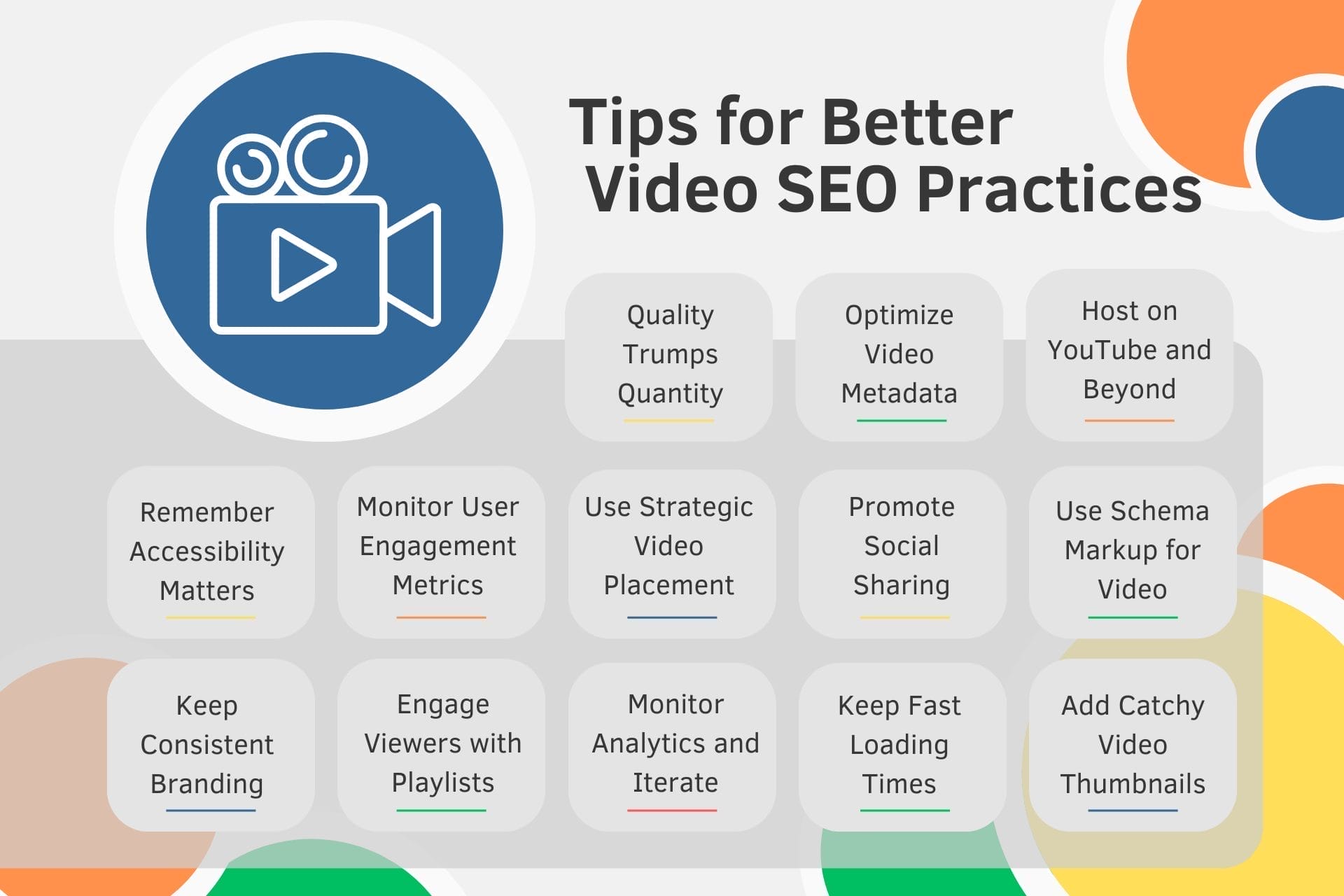
And remember, don’t let this list overwhelm you. Try to apply or improve upon as many of these tips as possible or alternatively, hire some professional SEO help.
Quality Trumps Quantity
While it’s tempting to flood your platforms with videos, quality is paramount. Invest time and resources in producing high-quality, engaging videos. Search engines prioritize content that keeps viewers on the page, so focus on creating compelling, relevant, and informative videos.
Optimize Video Metadata
Video SEO relies heavily on metadata. Ensure your video titles, descriptions, and tags are optimized with relevant keywords. This helps search engines understand the content of your video, improving its chances of appearing in relevant search results.
Host Videos on YouTube and Beyond
YouTube is a powerhouse and important to your video SEO strategy due to its integration with Google’s search algorithms. However, consider diversifying by using alternative platforms like Vimeo. This can expand your reach and cater to different audiences.
Remember Accessibility Matters
Adding transcriptions and closed captions not only makes your videos accessible to a broader audience but also enhances SEO. Search engines can crawl through this text, improving the indexing and ranking of your videos.
Monitor User Engagement Metrics
Beyond views, focus on metrics like watch time, click-through rate, and social shares. These metrics provide insights into how users interact with your videos. Search engines consider user engagement as a crucial factor in determining the relevance and value of your content.
Use Strategic Video Placement
Consider the strategic placement of videos on your website or landing pages. Embed videos where they naturally fit within your content, enhancing the overall user experience. This can positively impact user engagement and SEO.
Promote Social Sharing
Encourage viewers to share your videos on social media platforms. Social signals, such as shares and comments, can contribute to increased visibility on search engines. A strong social media presence enhances your overall online footprint.
Use Schema Markup for Video
Implementing schema markup for your videos can provide search engines with additional information about your content. This structured data can lead to rich snippets in search results, making your videos stand out and providing more context to users.
Keep Consistent Branding Across Videos
Consistent branding must be another important aspect of your video SEO strategy. Branding should be consistent across all your videos. This includes using a consistent intro/outro, logo placement, and color schemes. Consistency not only reinforces brand identity but also helps in associating your content with your brand in the eyes of search engines.
Engage Viewers with Playlists
Utilize playlists to organize your videos thematically. Playlists keep viewers engaged by offering a seamless viewing experience and can improve the likelihood of users watching multiple videos, increasing overall watch time.
Monitor Analytics and Iterate
Regularly analyze video analytics to gain insights into viewer behavior. Understand which videos perform well and why. Use this information to iterate and refine your video content strategy, continually improving its effectiveness.
Keep Fast Loading Times
Optimize the loading speed of your videos. Slow-loading videos can lead to user frustration and negatively impact SEO. Compress videos without compromising quality and use appropriate hosting solutions to ensure fast loading times.
Add Catchy Video Thumbnails
Create eye-catching and relevant video thumbnails. Thumbnails can significantly impact click-through rates. A compelling thumbnail encourages users to click on your video, contributing to higher engagement. Needing some direction? Check out Fotor’s 11 thumbnail design ideas.
Looking Ahead – Future Trends in Video SEO
Now that we’re caught up on today’s Video SEO best practices let’s look ahead and dabble in what could be next in your video SEO strategy. The dominant players are emerging technologies like AI, Augmented Reality, Machine Learning, and Interactive Videos.
Augmented Reality & Interactive Videos
I will be honest here – I had to stretch my mind to picture how the possibilities of using Augmented Reality (AR) within video as this technology is out of my wheel house. But here’s some examples of it at play that I found:
- Interactive Product Showcases – Viewers click on an item within the video to see detailed specifications, reviews, or even virtually try it using AR.
- AR-Enhanced Information Overlays – AR can be used to overlay additional information onto physical objects in the video. For example, a clothing brand’s video could use AR to display product details, pricing, and purchase links.
- Clickable Calls-to-Action (CTAs) – Part of your Video SEO strategy is incorporating interactive CTAs that prompt users to take specific actions, such as visiting a website, subscribing to a newsletter, or making a purchase. These clickable elements enhance user engagement and guide them through the desired conversion path.
- 360-Degree Videos & Virtual Tours – Video SEO can optimize 360-degree videos or virtual tours enhanced with AR elements. Viewers can navigate the video, exploring different angles or accessing additional information by interacting with AR overlays.
Seem far off? Maybe not quite as far as we might think.
Personalized Video Experiences
It has become a running joke in my household to start dropping potential gift ideas (think clothing items, electronics, events). I want my my partner to get personalized videos and ads to inspire the gift buying for me. Better yet, stealing their phone to do a few searches on Instagram and YouTube to seal the deal on targeted advertising and videos. Sneaky, huh!
It seems comedic but we can’t ignore how AI algorithms analyze user behavior, preferences, and historical interactions in order to curate video content tailored to individual tastes.
This personalization not only increases user engagement but also influences overall satisfaction. From a Video SEO strategy perspective, businesses leveraging AI-driven personalization can optimize their content to align with these algorithms. This involves understanding the factors that AI considers, such as user watch history, likes and dislikes, and strategically incorporating relevant keywords and metadata.
By embracing AI in personalized video recommendations, businesses not only enhance user satisfaction but also position their content for increased visibility, ultimately impacting their Video SEO strategy positively.
Social Media Synergy
If your Facebook feed is anything like mine, it’s 95% videos from content creators and very few posts and updates from my actual friends. And it works – I often find myself trapped on the couch watching video after video when I should be in bed sleeping.
If you stop to think about it, you’ll realize that social media platforms are shifting their algorithms and prioritizing video content. This shift is driven by the changing preferences of users who increasingly engage with and prefer consuming video material. For small businesses, staying aware of this evolution of short-form videos is crucial.
Platforms like Facebook are now favoring videos in users’ feeds, offering enhanced visibility to businesses that leverage this medium effectively. Short-form video content tends to garner higher engagement, shares, and comments, which are key metrics for algorithmic ranking. Small businesses that adapt and incorporate short-form video content into their social media strategy stand to benefit from increased reach, engagement, and the potential to forge stronger connections with their audience in an algorithmically-driven social media landscape.
Interactive & Shoppable Videos
If you run an e-commerce store – listen up! And if not, perhaps you might be interested to learn how you will shop in the future.
Shoppable videos can also be a part of your video SEO strategy. The potential for Video SEO in the realm of shoppable videos is substantial and transformative for e-commerce. Shoppable videos seamlessly integrate product information and purchasing options directly within the video content.
From product showcases to tutorials, businesses can optimize these videos for search engines to enhance their visibility and accessibility to potential customers. By incorporating Video SEO strategies, such as keyword optimization in video titles and descriptions, businesses can ensure that their shoppable videos rank higher in search results, driving organic traffic to their e-commerce platforms.
This approach not only streamlines the shopping experience for viewers but also positions the videos strategically in search engine algorithms. It maximizes their impact on sales and brand visibility.
Shoppable videos represent a dynamic convergence of video content and e-commerce. Leveraging Video SEO in this space can significantly enhance a brand’s revenue-generating capabilities.
Live Streaming & Real-Time User Engagement
Did you know that 80% of users would rather watch a live video than read a blog?
The growing popularity of live streaming brings profound implications for Video SEO.
Live streaming provides an authentic and real-time connection with audiences, fostering engagement and interaction. From a Video SEO perspective, this trend holds immense potential.
Live videos often generate higher levels of viewer engagement and longer watch times, both critical factors in search engine algorithms.
By optimizing live streaming content for relevant keywords, providing clear and concise titles and descriptions, and engaging with viewers in real-time, businesses can boost their visibility on search engine results pages.
The immediacy and interactivity of live streaming present a unique opportunity to enhance online presence, connect with audiences, and leverage Video SEO for increased discoverability in a dynamic digital environment.
Key Takeaways to Future-Proof Your Video SEO Strategy
- Whether you make one or a hundred videos within your SEO Marketing strategy, keep your customer the main focus. Your video needs to address their needs, concerns and interests first. This strengthens your connection with your audience and ensures the video resonates and engages on a deeper level.
- Attempting to trick search engines into granting a #1 rank for your video might provide a momentary thrill, but it’s a short-lived strategy. Search algorithms are becoming increasingly sophisticated, and any shortcuts you take to achieve a top spot are likely to be detected. Instead, focus on authentic Video SEO best practices.
- Video trends are in a constant state of flux. To stay ahead, prioritize adaptability and flexibility in your video SEO strategy. Keep up with current trends, but be prepared to adjust when preferences change. Experiment with different formats, platforms, video lengths, and interactive features. Listen to your audience and tailor your video content accordingly.
Need Help with Your Video SEO Strategy?
Whether you are brand new to video or have several videos on your YouTube channel, your social media, or website, we can help!
Let our experts apply our SEO knowledge to your website and video content strategy to boost your visibility, website traffic and number of quality leads.
Connect with our SEO Experts by calling toll-free 1-888-262-6687 or contact us online.
Carissa Krause
Carissa Krause is a Digital Marketing and Project Specialist at 1st on the List. Over the last 13+ years she has worked in our Abbotsford office with clients on a wide range of projects that include areas like local SEO, project reporting, backlink profile review, content development, strategic planning, and more. Whatever the project may be Carissa focuses on achieving greater efficiencies and putting plans into action. When away from her desk you’ll likely find her drinking all the coffee while sitting on the floor driving cars with her three young boys.
![A promotional graphic with the text "Is Your SEO Still Working in 2026?" and a blue button labeled "Book a Discovery Call." Below, it says "[No hassle, no pressure, just 30 minutes of insights]." The background has abstract blue shapes.](https://e28vvfjnij8.exactdn.com/wp-content/uploads/2024/09/blog-sidebar-cta-2-1.png?strip=all)
Don’t miss out – get newest posts straight to your inbox!
OTHER ARTICLES WE THINK YOU’LL ENJOY



Partner With Us. Get More Leads.
Stop trying to do it all on your own – reach out to our team and we can discuss marketing strategies that are best suited for your business!
“Your expertise has been a tremendous asset to our company … in the last 6 months of 2024, we had larger average job size, qualified leads and some we didn’t need to bid and compete for.”
“We have seen a steady increase in web traffic and quality leads since first working with 1st on the List. And we continue to see monthly increases through their efforts.”
“They have helped my firm grow organic web traffic month over month and their ongoing support and guidance is something you don’t typically receive from other established competitors.


[NO HASSLE, NO PRESSURE, NO WORRIES – JUST MEANINGFUL INSIGHTS]